
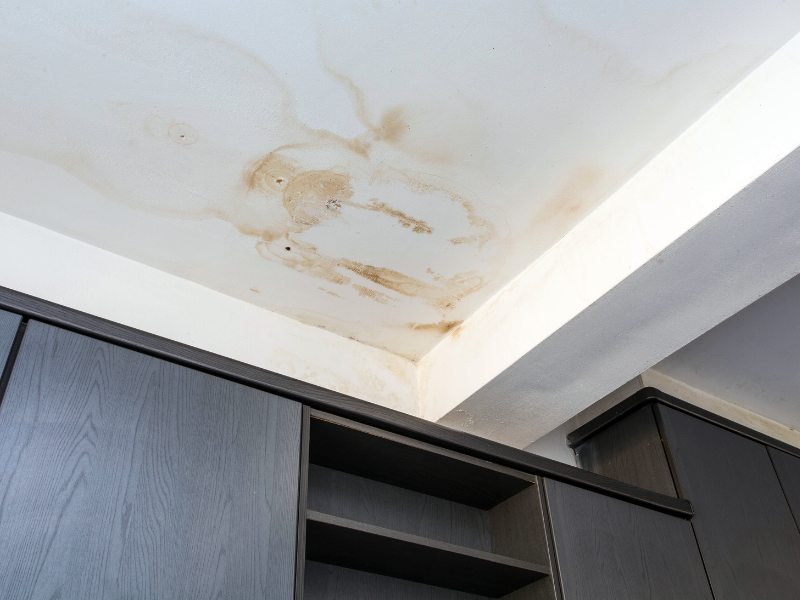
Discovering a water stain on your wall or ceiling can be frustrating. Whether it is a small yellow spot or a large brown stain spreading across your ceiling, many homeowners wonder if a fresh coat of paint will solve the problem. While painting may seem like the quickest and least expensive solution, it isn’t always the right one. The decision to paint over water stains or replace the drywall depends on the extent of the damage, whether the source of the water has been repaired, and the condition of the affected area. L.W. Winslow Painting, Inc will highlight difference that can help you avoid recurring stains, mold growth, and more expensive repairs in the future.
What Causes Water Stains on Drywall
Water stains occur when moisture seeps into drywall and leaves behind minerals, dirt, or other contaminants as it dries. The stain itself is usually a symptom of a larger issue that needs to be addressed. Common causes of water stains include:
- Roof Leaks
- Plumbing Leaks
- Overflowing Gutters
- HVAC Condensation
- Leaking Windows
- High Indoor Humidity
Before deciding how to repair the drywall, it is important to identify and fix the source of the moisture.
Can You Simply Paint Over Water Stains?
The short answer is not always. Applying regular paint directly over a water stain often results in the stain bleeding through the new paint. This is because the minerals and contaminants left behind by the water can migrate through ordinary paint, causing yellow or brown discoloration to reappear. In addition, painting over an active leak simply hides the symptom while allowing the underlying damage to continue worsening. Painting can be an effective solution if the drywall is still structurally sound and the water damage is only cosmetic. In these cases, professional painters typically clean the area, apply a high-quality stain-blocking primer, and then repaint the surface for a clean, uniform appearance. If you plan to repaint water-stained drywall, using a stain-blocking primer is one of the most important steps. A quality primer helps prevent water stains from bleeding through, improve paint adhesion, create an even finish, seal discoloration and extend the life of the new paint. Skipping this step often results in stains reappearing within weeks or months.
When Drywall Should Be Replaced
Sometimes, replacing the drywall is the safest and most effective solution. Drywall replacement is recommended when water weakens drywall over time. If the affected area feels soft, spongy, or begins to sag, the material has likely lost its structural integrity and should be replaced. Persistent moisture creates the perfect environment for mold growth. If mold is present inside or behind the drywall, replacement is often necessary to remove the contaminated materials safely. Large areas of water damage usually require more than cosmetic repairs. Replacing damaged drywall ensures the wall or ceiling is restored properly. If the paper facing is peeling away or the drywall is breaking apart, repainting won’t solve the problem. New drywall will provide a stable surface for finishing and painting.
Interior & Exterior Painting & More in Amagansett, Bridgehampton, East Hampton, Hampton Bays, Montauk, North Haven, North Sea, Noyack, Shelter Island, Sag Harbor, Shinnecock Hills, Southampton, Springs, Water Mill, Westhampton & Westhampton Beach, New York
While it may be tempting to simply paint over a water stain, doing so without addressing the underlying problem often leads to disappointing results. If the drywall is dry, structurally sound, and free of mold, a stain-blocking primer and fresh coat of paint may be all that’s needed. For help addressing drywall repairs and painting, contact L.W. Winslow Painting, Inc today.